The short answer
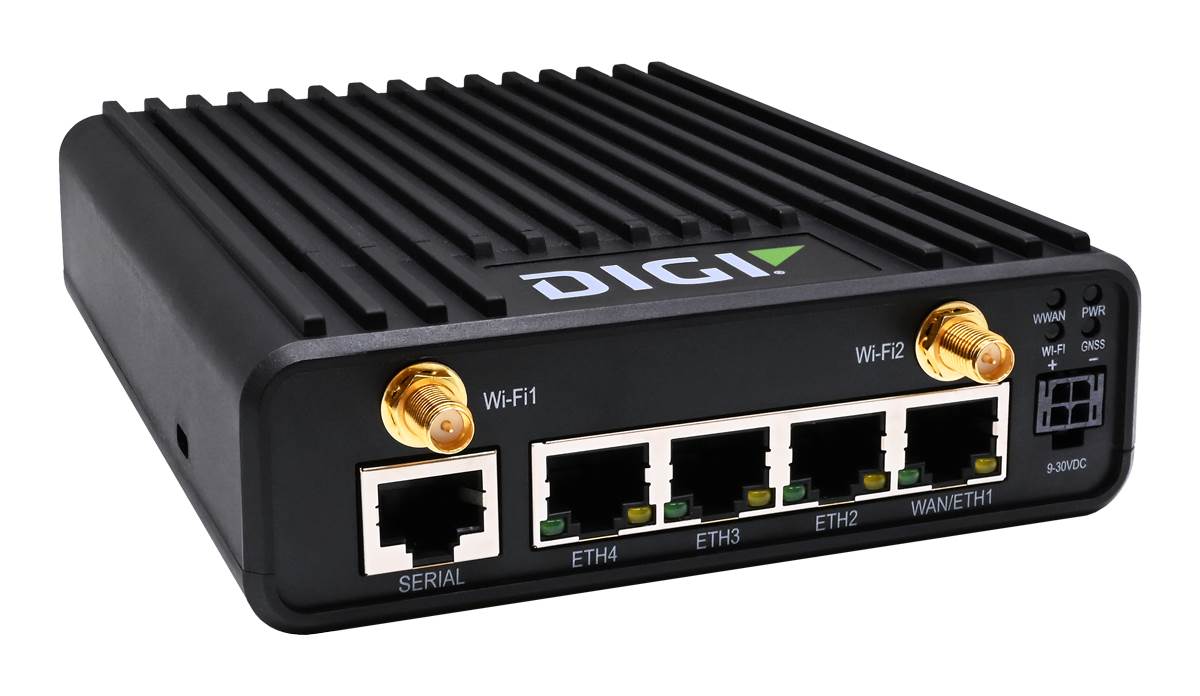
As of November 2026, Digi International makes the only SGP.32 router I can find with SGP.32 compliance stated on its spec sheets. Its eSIM accessory for EX, IX and TX routers lists SGP.32 v1.2, and the IX25 has a soldered SGP.32 eSIM. Teltonika, Robustel and most of the rest ship eSIM routers built on the consumer standard, SGP.22, with their own cloud tools on top. That gap is now the biggest thing between SGP.32 on paper and SGP.32 in the field.
I have spent most of this year writing about the cloud side of SGP.32: the eIM, the orchestrators, the operators lining up profiles. The connectivity providers have moved fast. Telenor, Tele2, Kigen, Soracom, emnify, Onomondo and others all sell SGP.32 now, and you can see them in the UK SGP.32 directory. But when someone asks me “which router should I buy to use it?”, the honest answer for most of 2026 has been a very short list. This post is about why that list matters, how we got here, and what to look for next.
SGP.32 routers in four eras
Routers have been through four distinct phases of SIM handling. Each one solved a real problem and left another behind.
| Era | How the SIM worked | What it solved | What it left behind |
|---|---|---|---|
| 1. Plastic SIM | One operator per card, dual slots for failover | Simple, cheap, universal | Every network change meant a site visit |
| 2. Multi-IMSI and SGP.02 | Several identities on one card, or operator-managed M2M eSIM | Coverage choice without touching the device | Choice limited to one provider’s partners |
| 3. SGP.22 eSIM routers | Consumer eSIM chip in the router, profiles pushed through the vendor’s cloud | Real remote profile downloads from many operators | A consumer standard stretched to fit, with every vendor doing it differently |
| 4. SGP.32 routers | IoT eSIM with an IPA on the router, driven by an eIM you choose | Fleet-scale switching with a standard control path | Still very few products to choose from |
Where the main router makers stand
This is what each vendor says publicly about its own products, checked in November 2026. If a vendor has shipped something newer, I would genuinely like to hear about it.
| Vendor | eSIM approach | Standard stated | Management |
|---|---|---|---|
| Digi International | 2FF eSIM accessory for EX, IX and TX routers; soldered MFF2 eSIM in the IX25 | SGP.32 v1.2 (and SGP.22 v2.3) | Digi Remote Manager |
| Teltonika | Built-in eSIM on eSIM model variants, with bootstrap profiles | SGP.22 | RMS, plus the RutOS app |
| Robustel | Embedded Kigen eSIM/eUICC on “e” models | SGP.22 today, SGP.32 on the roadmap | RCMS |
| Ericsson Cradlepoint | Built-in or insertable eSIM, up to eight profiles | Not stated per product | NetCloud |
| Semtech (AirLink) | SGP.32 eSIM connectivity service launched November 2026 | SGP.32 at service level; not stated on router spec sheets | AirVantage, ALMS |
| Cisco | eSIM on industrial routers; SGP.32 orchestration in IoT Control Center | SGP.32 at platform level; not stated on router spec sheets | IoT Control Center, SD-WAN Manager |
Two of those rows are worth reading carefully. Semtech and Cisco both now have SGP.32 in their connectivity platforms, which is a big deal. But a platform that can manage SGP.32 profiles is not the same as a router you can buy today with a certified SGP.32 eSIM and IPA inside. Until the router spec sheet says so, I treat it as “coming”, not “here”.
Why SGP.22 routers are not the same thing
I want to be fair to the SGP.22 routers, because some of them are very good. I have written before about what SGP.22 done properly looks like, and Teltonika’s own material describes its approach as SGP.22 compatibility with SGP.32-style remote management. That is a fair description. You can push profiles to a fleet through RMS today, and the bootstrap profiles Teltonika began rolling out in October 2025 mean a router can connect out of the box.
The difference is who controls the path. With an SGP.22 router, the vendor’s cloud and the router’s firmware stand in for the person who would normally scan a QR code. It works, but each vendor builds that bridge its own way. With SGP.32, the router runs a standard IPA and takes instructions from a standard eIM, so the same eIM can manage a Digi router, a meter and a tracker with the same commands. That is the whole point of the standard: the control path stops being tied to the hardware brand.
SGP.22 eSIM router
Consumer eSIM chip. The vendor’s cloud triggers downloads. Works well inside one vendor’s ecosystem, but the method differs from brand to brand.
SGP.32 router
IoT eSIM with an IPA on the router. Any compliant eIM can drive it. Mixed fleets can be managed through one standard path.
Why the router is the next important step
The SGP.32 dream is simple to say: buy hardware once, choose your network forever, and never send an engineer to change it. The cloud half of that dream is largely built. The device half is where it stalls, and routers matter more than any other device for three reasons.
- A router carries a whole site. A meter is one data point. A router is the CCTV, the PLC, the payment terminal and the remote access for an entire location. Network flexibility there has the biggest payback.
- Routers live longest in the hardest places. Roadside cabinets, pumping stations, substations, rooftops. These are the sites where a call-out costs the most, and where a ten-year life is normal.
- The IPA has to live somewhere. In SGP.32 the IPA runs either in the device or inside the eUICC. For a router, that means firmware support from the router maker or a chip that carries it. Without one of those, the best eIM in the world has nothing to talk to.
That third point is the one buyers miss. Your connectivity provider can sell you SGP.32 tomorrow. Whether your router can use it depends on the router maker, the modem firmware and the eUICC, all agreeing. I covered the modem side in is your cellular modem really ready for SGP.32?, and the IPA choice in IPAe vs IPAd.
What Digi got right
Digi did two things I think the rest of the market will copy.
- A retrofit path. The Digi eSIM accessory is a plastic 2FF card that goes into routers already in the field. It holds up to eight operator profiles and ships with a bootstrap profile, so an existing estate can move towards SGP.32 without replacing hardware. For anyone with hundreds of installed routers, that is the difference between “next year” and “next refresh cycle”.
- A built-in path. The IX25, launched in spring 2026, solders an SGP.32 eSIM onto the board alongside LTE, 5G RedCap and full 5G options. New installs get SGP.32 from day one.
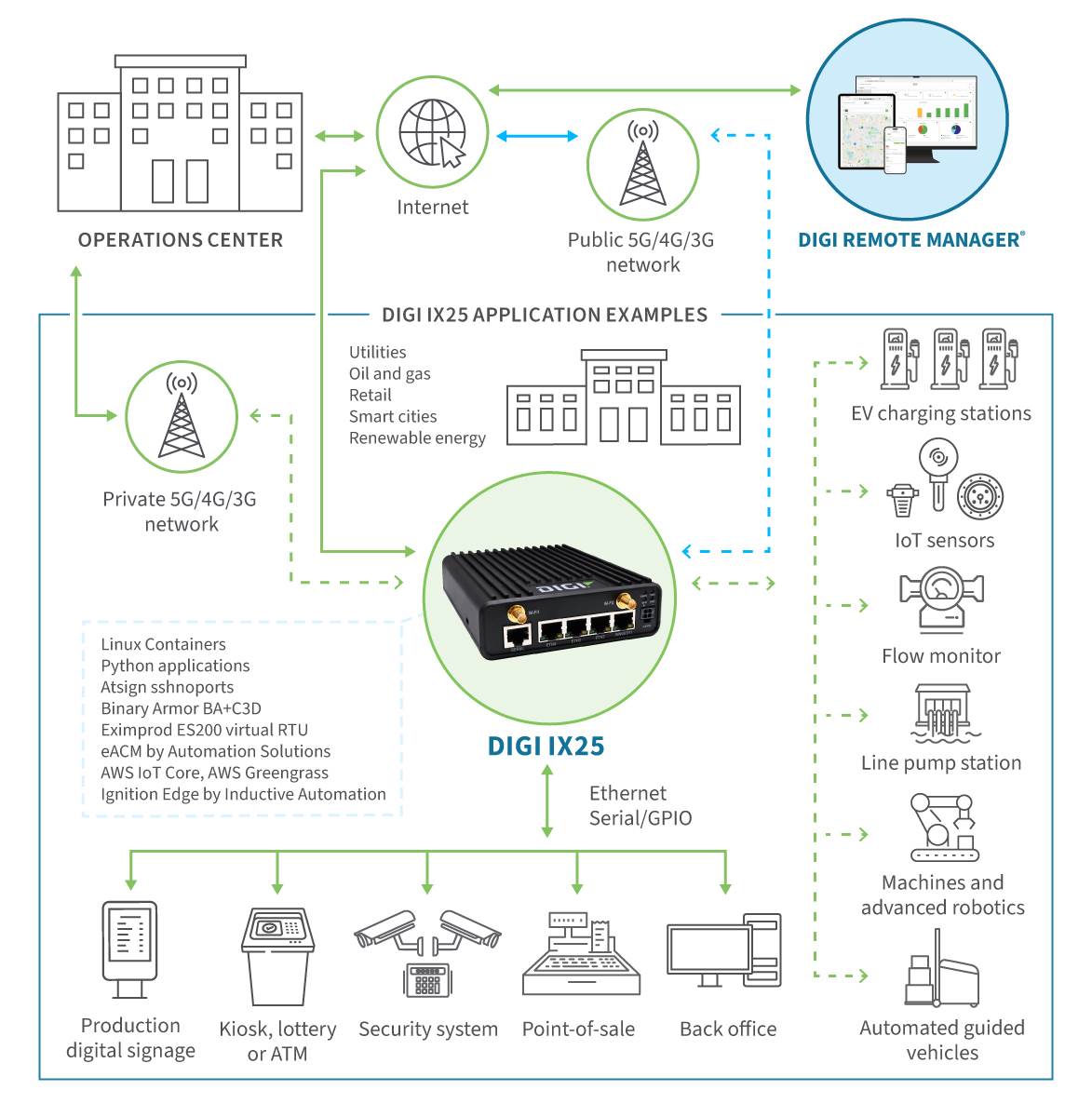
Both are managed through Digi Remote Manager, which is the one caveat I would flag. Ask Digi, as you would any vendor, whether you can point the router at an eIM of your choice or only at theirs. Standard hardware with a single permitted control path is better than SGP.22, but it is not yet the full dream. Chapter 11 of The SGP.32 Handbook explains why that question matters so much.
What to ask your router vendor
- Does the spec sheet state SGP.32, and which version?
- Is the eUICC certified against that version?
- Where does the IPA run: router firmware (IPAd) or the chip (IPAe)?
- Which eIMs has the router been tested with, and can I use my own?
- Is there a bootstrap profile, who provides it, and what does it cost after year one?
- Can routers already in the field be upgraded, by firmware or by an eSIM accessory?
- If the answer is SGP.22 today, is there a dated plan for SGP.32, and will it be a firmware update or new hardware?
What I expect in 2027
My view, not a forecast from any vendor: 2027 is the year SGP.32 moves from the spec sheet of one router maker to several. Robustel has said publicly that SGP.32 is on its roadmap with Kigen. Semtech and Cisco have the platforms in place. And Teltonika has a large installed base of SGP.22 eSIM routers and a bootstrap programme already running. How Teltonika handles the move to SGP.32, and whether existing routers can make it, is the router story I will be watching most closely. Until then, if SGP.32 is a hard requirement in your tender, the shortlist is short, and it starts with Digi.
Quick answers
Which routers support SGP.32 in 2026?
As of November 2026, Digi International is the only router maker I can find that states SGP.32 compliance on its spec sheets: the Digi eSIM accessory for EX, IX and TX routers (SGP.32 v1.2) and the IX25 with a soldered SGP.32 eSIM.
Is Teltonika SGP.32?
No. Teltonika's eSIM routers use SGP.22, the consumer eSIM standard, with remote profile management through its RMS platform and bootstrap profiles.
Is Robustel SGP.32?
Not yet. Robustel describes its current eSIM routers as SGP.22-based, and has said it is working towards SGP.32 with Kigen.
What is the difference between an SGP.22 and an SGP.32 router?
An SGP.22 router uses a consumer eSIM, and the vendor's cloud stands in for the user who would normally scan a QR code. An SGP.32 router runs a standard IPA and takes instructions from any compliant eIM, so mixed fleets can be managed one way.
Can I upgrade an existing router to SGP.32?
Sometimes. Digi's plastic eSIM accessory adds SGP.32 to supported EX, IX and TX routers already in the field. For other brands, ask whether the modem firmware and IPA can be updated, or whether new hardware is needed.